


Do Facial Exercises Help With Wrinkles? What the Research Really Shows
Do facial exercises help with wrinkles, or is “facial yoga” just another skincare trend that sounds better on social media than it works in real life? At Lumière Beauty & Spa, clients ask us this often, usually after seeing a video promising a natural facelift from a few minutes of cheek puffing and eyebrow lifts a day. The honest answer sits in the middle: the science is thinner than the marketing suggests, and what little evidence exists points to modest, slow changes in facial fullness rather than a real reduction in wrinkles. Below, we walk through what the actual research found, where facial exercise might genuinely help, where it can backfire, and how it compares to treatments with far stronger clinical backing.
Key Takeaways
- The most-cited facial exercise study needed 20 weeks of near-daily practice to show only modest improvement in cheek fullness — not wrinkle reduction.
- Repetitive facial movement is the same mechanism that creates expression wrinkles in the first place, making facial yoga a genuine double-edged sword.
- Radiofrequency-based treatments like LED Skin Tightening have measurably stronger, FDA-recognized clinical evidence for reducing wrinkles and sagging.
- Microneedling + Salmon DNA Serum Infusion works through a proven wound-healing and collagen-remodeling response, with results building over several sessions.
The Science Behind Facial Yoga: Muscle Tone, Blood Flow, and Collagen Claims
Proponents of facial exercise point to three possible mechanisms. The first is muscle toning: repeated contraction of cheek and jaw muscles may build a small amount of bulk, giving the mid-face a fuller, less hollow look. The second is increased blood flow to facial tissue, which is a reasonable theory but has never been directly measured in a controlled trial. The third, and most heavily marketed, is collagen stimulation — the idea that exercising your face triggers your skin to produce more collagen, the protein responsible for firmness. This claim is not well established. No published human trial has directly shown that facial exercise increases dermal collagen; the research that exists measures how old people look to outside raters, not what is actually happening inside the skin. So do facial exercises help with wrinkles based on mechanism alone? Plausible biology is not the same as proven results, and none of these three mechanisms has been confirmed to translate into fewer or shallower wrinkles.
The Most-Cited Study: What the JAMA Dermatology Trial on Facial Exercise Actually Found
The study nearly every facial yoga article references is a 2018 pilot study published in JAMA Dermatology by researchers at Northwestern University’s Feinberg School of Medicine. Twenty-seven women aged 40 to 65 were taught 32 distinct facial exercises and asked to practice for about 30 minutes daily or every other day. Only 16 of the 27 completed the full 20-week program — a dropout rate worth noting on its own. At the end, independent raters who did not know the study’s purpose judged the women’s faces to look roughly three years younger on average, with the biggest gains in mid-face and cheek fullness.
That is a genuinely interesting result, but the caveats matter. The sample size was small even before dropouts. It was a pilot study without the kind of control-group comparison a larger trial would include. The outcome measured was subjective appearance rating, not objective wrinkle depth, collagen density, or skin elasticity. And the women who stuck with a 20-week routine were likely more motivated and health-conscious to begin with, which can skew results on its own. Even taken at face value, this “gold standard” study found modest fullness improvement — not wrinkle reduction and not skin tightening.
Do Facial Exercises Help With Wrinkles or Can They Make Them Worse?
Here is the part most facial yoga content leaves out: repetitive facial movement is also the literal mechanism that creates dynamic wrinkles in the first place. A 2011 study found that facial movements are directly linked to wrinkle formation, and that static wrinkles — the lines visible even at rest — often originate from the same repeated kinetic patterns as expression lines like crow’s feet and forehead creases. In other words, the same squinting, brow-raising, and pursing that facial yoga asks you to repeat dozens of times a day is also how those lines got there.
The rest of the published research is thin. A 2014 controlled study testing four facial exercises found a significant difference in only one measure — upper lip appearance — essentially a null result across the board. A 2014 systematic review concluded evidence was insufficient to determine whether facial exercises work, and called for large randomized trials before drawing conclusions. A follow-up systematic review in 2025 reached the same verdict: some region-specific improvements were observed, but the evidence still isn’t strong enough to recommend facial exercise with confidence. A decade later, essentially nothing has changed. If you already have pronounced expression lines, thin skin, or use Botox specifically to reduce muscle movement, vigorous facial exercise may work against your goals rather than for them. For this group especially, the answer to do facial exercises help with wrinkles can genuinely be no — and in some cases, the movements can make lines more noticeable rather than less.

Do Facial Exercises Help With Wrinkles as Much as LED Skin Tightening or Microneedling?
Once you compare the evidence side by side, the gap is significant. Radiofrequency-based skin tightening has multiple studies showing statistically significant reductions in wrinkles and sagging — one retrospective study of 158 patients found improvement across seven anatomical regions with a p-value under 0.001, and RF devices have been FDA-cleared for treating facial wrinkles since the early 2000s. The mechanism is measurable: radiofrequency energy heats deeper skin tissue to roughly 40–48°C, which causes existing collagen fibers to contract immediately while stimulating new collagen and elastin production over the following weeks. Our LED Skin Tightening treatment is built around this kind of energy-based approach, giving clients a dose-dependent, professionally monitored alternative to a 20-week at-home experiment with uncertain results.
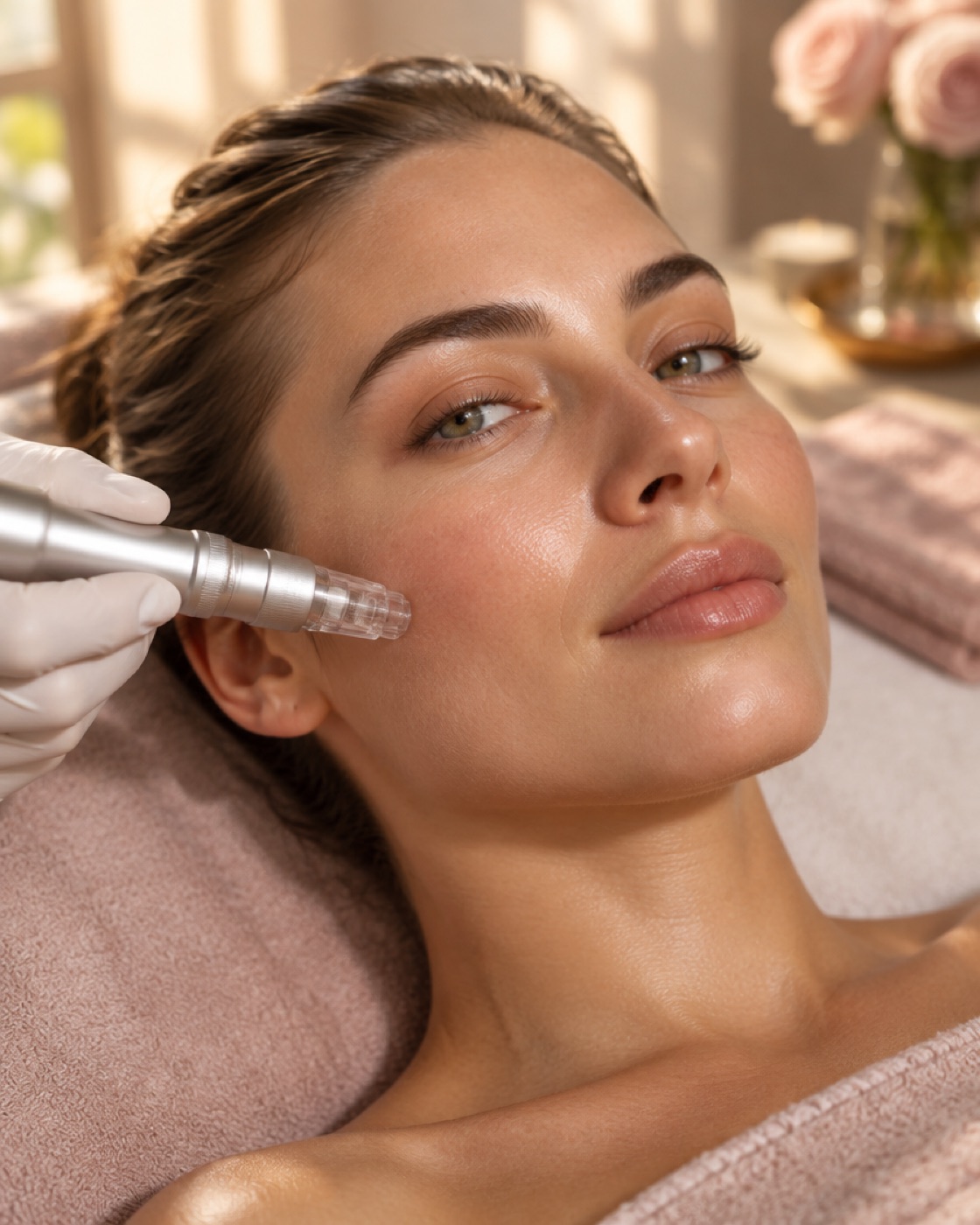
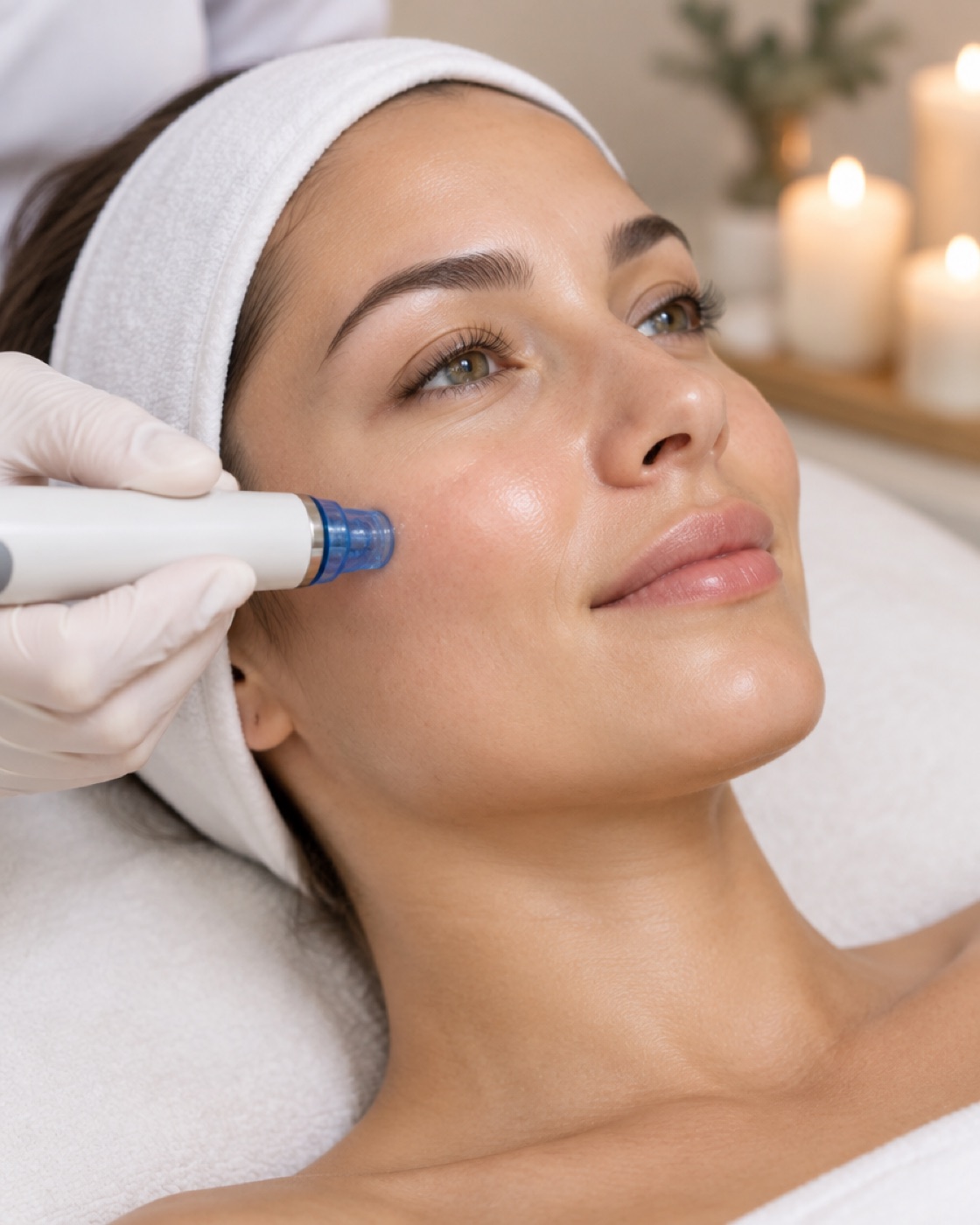
Microneedling carries moderate but real evidence for improving fine lines and skin texture. Controlled micro-injury from the needles triggers a wound-healing cascade that remodels collagen over several sessions. Our Microneedling + Salmon DNA Serum Infusion layers a regenerative serum onto that same mechanism, which is a promising adjunct even though the serum component itself is less rigorously studied than microneedling alone. Facial yoga’s best evidence, by comparison, is a single small pilot study measuring how old a face looked to a rater — not a comparable level of proof. If you have already tried the basics of sunscreen, retinoids, and a consistent skincare routine and want results you can actually measure, an in-office treatment is the more evidence-backed next step, and our team can walk you through what to expect during a consultation.
FAQ
Do facial exercises help with wrinkles?
The short answer is: not much, based on the evidence we have. The most-cited study, published in JAMA Dermatology in 2018 by Northwestern University researchers, found that 20 weeks of near-daily facial exercises modestly improved cheek and mid-face fullness in a small group of women, and blinded raters judged them to look about three years younger on average. But the study didn’t measure actual wrinkle depth, collagen, or skin elasticity, only appearance ratings. Other reviews, including a 2014 systematic review and a 2025 follow-up, concluded the evidence remains insufficient to say facial exercises reliably reduce wrinkles.
How long does it take to see results from facial yoga?
If facial exercises help at all, published research suggests changes are slow. The main study used a 30-minute routine performed daily or every other day for 20 weeks, about five months, before any visible difference was reported by independent raters. There is no credible evidence supporting faster results.
Can facial exercises make wrinkles worse?
It’s biologically plausible. Repetitive, forceful facial movements — squinting, brow-raising, pursing the lips — are part of how dynamic expression wrinkles form in the first place. People who already have pronounced expression lines or thin skin may notice more creasing rather than smoothing, especially with vigorous or exaggerated movements. If exercises seem to make a line more noticeable, that’s a sign to stop.
How do facial exercises compare to treatments like LED skin tightening or microneedling?
Professional treatments have considerably stronger clinical backing. Radiofrequency-based skin tightening has multiple studies showing statistically significant reductions in wrinkles and sagging, including FDA-cleared devices, and microneedling has moderate evidence for improving fine lines and texture through a collagen-stimulating wound-healing response. Facial yoga’s best evidence is a single small pilot study showing modest fullness improvement, which isn’t a comparable level of proof.
Is it safe to do facial exercises alongside Botox or filler?
It’s worth discussing with your provider. Since vigorous facial exercise emphasizes repeated muscle contraction, it can work against the goal of Botox, which aims to reduce muscle movement in treated areas. It’s not necessarily harmful, but if you’re investing in professional treatments to minimize expression lines, ask your provider how much facial exercise, if any, makes sense for your specific treatment plan.
Trusted Sources
- Association of Facial Exercise With the Appearance of Aging — JAMA Dermatology
- Can Facial Exercises Reverse the Signs of Aging? — Harvard Health Blog
Ready for Wrinkle Results Backed by Real Evidence?
Book your treatment at Lumière Beauty & Spa in Murray, Utah. Expert care for Utah skin.


